When we switched electricity supplier in February 2026, we expected the existing smart meter to continue sending readings after a short transfer period.
Instead, readings appeared in irregular batches, access to time-of-use tariffs was delayed and our export application became another process that required repeated chasing.
This article records the timeline as it happened. It should not be read as a description of our current supplier or account.
July 2026 update: we later moved from Octopus to EDF for import and export. The export MPAN issue was resolved, and the solar installation is now paid through EDF Export Exclusive. This remains a useful account of what to document and ask when smart-meter communication breaks during a supplier switch.
Why we moved to Octopus
We had used E.ON Next Drive from around July 2025. Its cheaper overnight electricity suited our heat pump and two electric cars.
As our solar, Powerwall and EV charging setup developed, we wanted Intelligent Octopus Go and its supplier-managed charging through a compatible charger.
The electricity supply transferred on 18 February 2026.
The first two weeks
Octopus advised that smart-meter communication could take up to two weeks to appear after the switch.
We waited. No readings appeared in the online account.
Early contacts produced the same general response: allow more time and the readings should eventually arrive. That was uncomfortable because time-of-use billing and export both depended on reliable half-hourly data.
4 March: readings finally appeared
On 4 March, more than two weeks after the transfer, we spoke to somebody who acknowledged the delay and carried out work on the account.
Later that day, a batch of readings appeared.
That allowed us to move to Octopus Go. We also asked for the export process to begin so the solar electricity leaving the house could be paid once the relevant metering arrangements were in place.
The readings stopped again
The initial batch did not become a reliable daily feed.
During the following week, no new readings arrived. When the Hypervolt Pro 3 was installed on 12 March, we wanted to move from Octopus Go to Intelligent Octopus Go, but the missing meter data initially prevented the change.
Further calls and emails followed. Another batch of readings appeared on 13 March, and we could then activate Intelligent Octopus Go.
What the pattern looked like
By mid-March, readings appeared approximately every seven to ten days rather than consistently.
From the customer side, it felt as though support intervention occasionally triggered a successful recovery, followed by another period of silence. We could not see enough of the underlying process to know whether that was literally what happened.
The important point was that the account did not have the dependable half-hourly flow expected from a functioning smart-meter setup.
Why communication problems were suspected
Our area has weak mobile reception, so we asked whether the communications hub might need additional help, including an external aerial.
Smart-meter communication is handled through the national smart-meter network rather than simply using a customer’s normal broadband connection. The exact equipment and communications route vary by meter generation and location.
Poor communication was a reasonable possibility, but we were not meter engineers and could not diagnose the root cause from the account behaviour alone.
That distinction matters. A customer can describe the symptoms and ask informed questions without presenting a guess as a confirmed fault.
The export problem
At the same time, our solar and Tesla Powerwall installation was exporting electricity without an active export payment.
We repeatedly asked whether the export application had been submitted and for confirmation of its status. The lack of a clear answer made the issue harder to manage because smart-meter communication, export registration and supplier administration were overlapping.
The export arrangements were eventually completed. We now receive payment through EDF rather than Octopus, and the effect of paid export is visible in our six-month solar and Powerwall data.
What helped
Keeping a dated timeline
We recorded calls, emails, dates and the advice given. That made it much easier to explain that the issue was recurring rather than a single short delay.
Separating the problems
We treated these as related but distinct workstreams:
- import meter readings
- access to the time-of-use tariff
- smart EV charging eligibility
- export MPAN and export account setup
A successful update in one area did not prove that the others were complete.
Checking the account rather than assuming
When somebody said a task had been completed, we checked for the expected result: new readings, tariff activation or written export confirmation.
Submitting manual readings where possible
Manual readings helped protect billing accuracy while automated communication remained unreliable. They did not replace the half-hourly data needed for all smart-tariff features, but they reduced the risk of estimated bills.
What I would ask a supplier now
If readings stop after a switch, I would ask for clear answers to the following:
- Has the meter been successfully enrolled and adopted on the new supplier’s systems?
- What is the timestamp of the most recent half-hourly data received?
- Is the failure affecting electricity, gas or both?
- Has a communications-hub recovery or diagnostic request been raised?
- Is an engineer visit or aerial assessment appropriate for this property?
- Is the tariff blocked only by missing readings, or is another eligibility step outstanding?
- What is the separate status of the export registration and MPAN?
- What reference number should be used when following up?
Those questions are more useful than repeatedly asking whether the smart meter is “working”.
What I would do differently
I would still allow the normal transfer period, but I would begin documenting the issue from day one.
After the quoted timescale passed, I would:
- request a case or complaint reference
- ask for the latest successful data timestamp
- keep import and export queries separate
- confirm every promised action in writing
- retain screenshots of missing or delayed readings
- submit manual readings for billing where available
- escalate when repeated contacts produce no durable change
The wider lesson
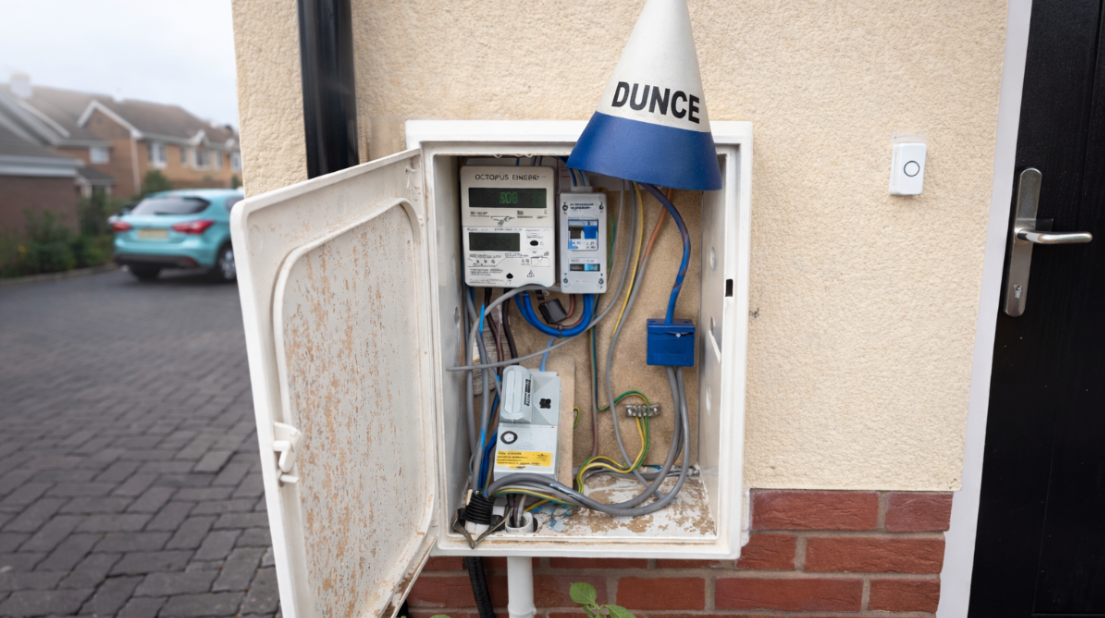
A smart meter is not only the physical display and meter in the cupboard. It is part of a chain involving the meter, communications hub, national network, supplier systems, tariff platform and customer account.
A failure anywhere in that chain can look identical from the app: no readings.
Our experience was eventually resolved, but not through passive waiting alone. The most useful tools were a clear timeline, specific questions and persistent separation of the different processes involved.
Our current supplier decision and tariff setup are covered in Why we moved from Octopus to EDF.