We had wanted solar panels for some time. Moving into an all-electric new-build in March 2025 made the case much stronger.
The house has no gas supply. Heating and hot water come from a Mitsubishi Ecodan air source heat pump, while two electric cars add a substantial amount of flexible electricity demand. With somebody often working from home, daytime consumption also matters.
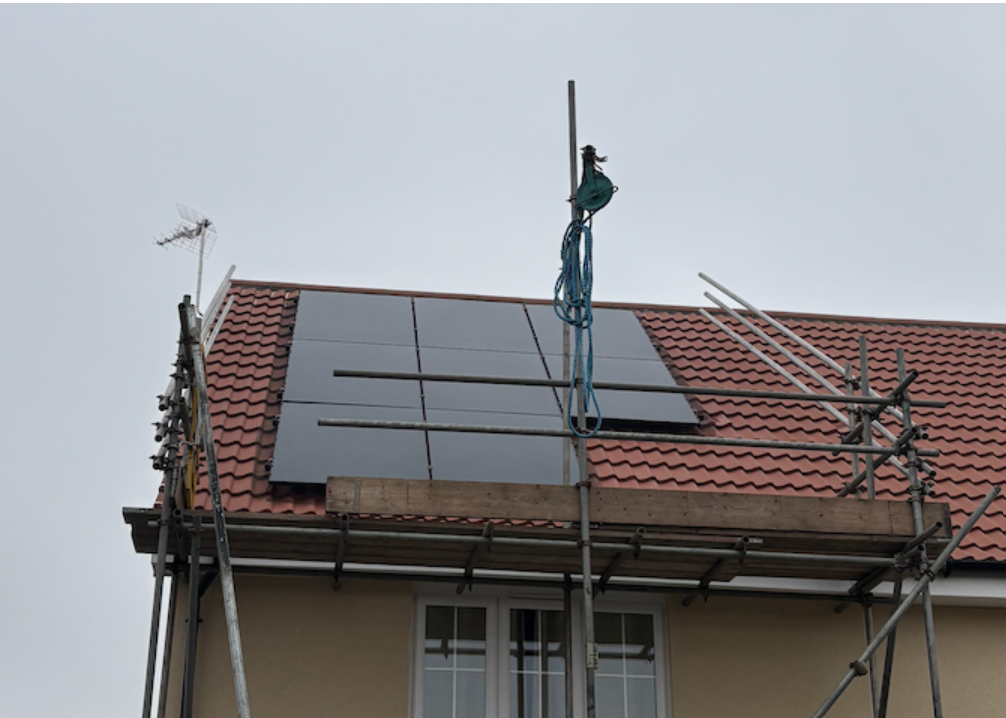
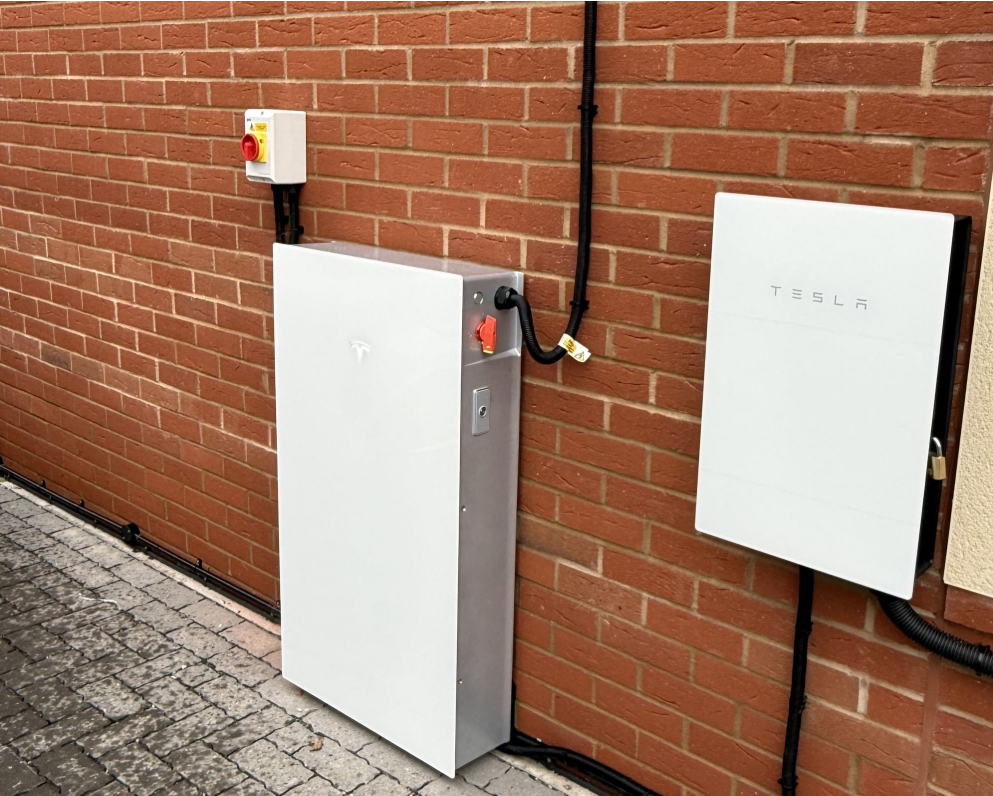
We chose a 7.6kW east-west solar array and a Tesla Powerwall 3. The products have performed well. The installation process was more complicated than it should have been.
July 2026 update: this article records the installation and our first weeks of generation. The export MPAN issue mentioned below was subsequently resolved, and we now use EDF for import, export and smart EV charging. A separate six-month performance article will examine the fuller generation and household-use data.
The system at a glance
| Component | Our installation |
|---|---|
| Solar panels | 16 × Aiko 475W panels |
| Total panel capacity | 7.6kW |
| Roof layout | Eight east-facing and eight west-facing panels |
| Battery | Tesla Powerwall 3 |
| Backup | Tesla Gateway with whole-home backup |
| Additional work | Bird protection and an earth rod |
| Final cost | Just under £15,000 |
| Fully operational | 2 February 2026 |
Why we chose solar and battery storage
Our first objective was to reduce expensive daytime import.
Before solar, cheap overnight tariffs helped with EV charging, hot water and some heating demand. Daytime electricity still came from the grid at the higher rate, precisely when the house was occupied and using energy.
Solar could reduce that daytime import. The battery could extend the benefit into the evening and give us more control over when we import electricity.
Since moving to EDF, the calculation has developed further. A strong export rate means the system is not simply about maximising self-consumption. It is about choosing intelligently between using, storing and exporting each unit of solar.
Why we chose the Powerwall 3
We considered several batteries but repeatedly came back to the Tesla Powerwall 3.
The practical attractions were:
- a clean wall-mounted design
- an integrated solar inverter
- whole-home backup through the Gateway
- a polished consumer app
- the option to expand storage later
- useful integration possibilities with Home Assistant
We had reservations about Tesla as a brand because of Elon Musk. In the end, we separated that concern from the product decision. The Powerwall was the strongest fit for our installation.
The east-west panel layout
The roof has eight panels facing approximately east and eight facing west.
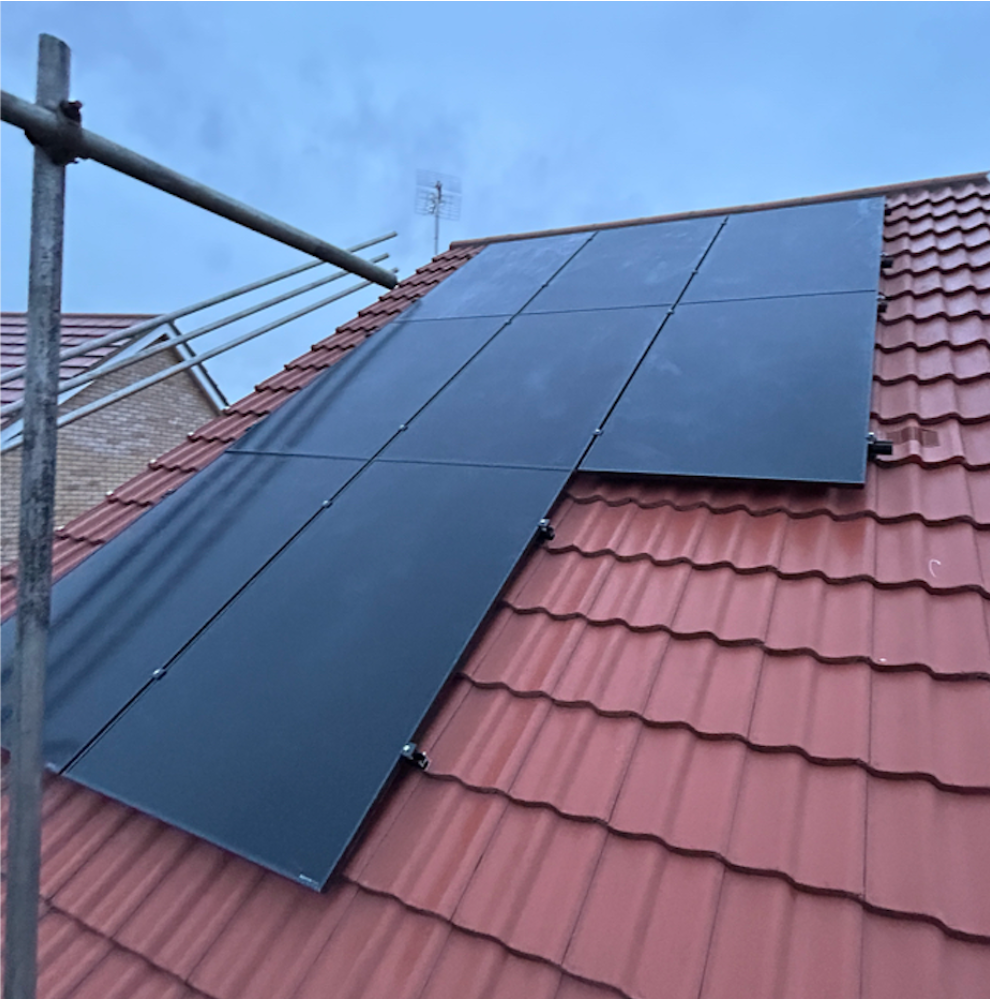
An east-west system does not concentrate all generation into one sharp south-facing peak. Instead, it produces across a longer part of the day, with stronger morning generation at the front and stronger afternoon generation at the back.
That pattern suits an occupied home with continuous daytime demand. It also gives the Powerwall more hours in which to charge from solar.
What it cost
The final cost was just under £15,000.
The original quotation was nearer £14,000, but we later paid roughly:
- £500 for the earth rod
- £500 for bird protection around the panels
Both were items we believe should have been discussed and included clearly in the original whole-system quotation.
Financing the installation
We used an interest-free home-improvement loan arranged through Lendology and Suffolk County Council.
The scheme available to us at the time significantly improved the cash-flow calculation. Availability can change by local authority and over time, so anyone considering a similar route should check current local schemes rather than assuming ours is still open.
Because the house was a new build, the loan could not be finalised until the title deeds were registered in our names. That delayed the project from early summer into autumn 2025.
Choosing Contact Solar
We obtained an installation quotation from Octopus Energy and then approached Contact Solar, which matched the headline price.
We chose Contact Solar because the person handling the sale was easy to deal with and made the process feel straightforward.
In hindsight, the quotations were not directly equivalent. The Octopus proposal included items that later became extras with Contact Solar, particularly bird protection and the earth rod.
The lesson is simple: compare the full scope, not only the total shown at the bottom of the first page.
The installation timeline
- Early summer 2025: finance approved in principle
- Autumn 2025: title deeds resolved and finance finalised
- December 2025: G99 approval granted by the distribution network operator
- Late January 2026: principal installation completed over two days
- 2 February 2026: system became fully operational
- Mid-February 2026: cracked panel replaced, bird protection installed and outstanding work completed
The delay between the December approval and late-January installation reflected Christmas, scaffolding availability and scheduling rather than one single problem.
What went wrong
This was our experience of one installation. Other customers may have had a completely different experience, but the problems are worth documenting because they produced useful questions for future buyers.
A cracked panel
The installation team told us that one panel on the west-facing array was cracked. We were initially told the east-facing array would still generate, but it did not.
The east-facing array was not connected
When another team returned, they found that the electrical tails for the east-facing array had not been connected.
For roughly two weeks, the Powerwall was operational but neither solar array was generating, despite us believing one side was live.
Bird protection was not included
The original Octopus quotation included bird protection. The Contact Solar price match did not.
After discussion, we paid an additional £500. The issue was not that bird protection has no cost. It was that a supposed price match did not include the same scope.
The earth rod became an extra
The whole-home backup arrangement required an earth rod, which was not included in the initial Contact Solar price.
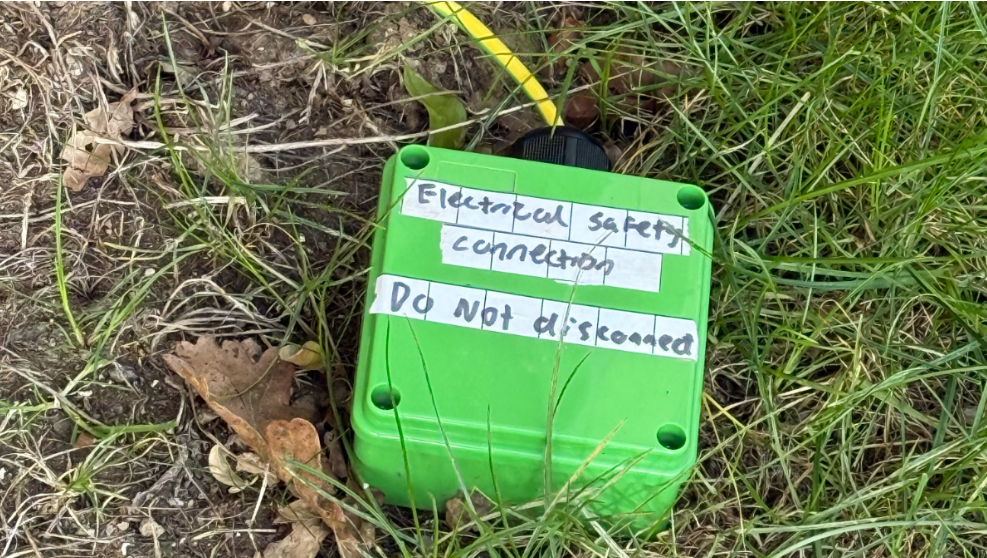
We paid approximately £500 more. For a quotation that already specified whole-home backup, we expected that requirement to have been identified from the start.
Paperwork and export configuration required chasing
We repeatedly chased confirmation of the G99 process and eventually contacted the network operator ourselves.
We also needed Contact Solar to enable the Tesla setting that allows a choice between exporting solar only and exporting energy from the battery as well.
When this article was first published, the export MPAN had not yet reached our supplier, so exported energy was not being paid. That issue was later resolved.
Early generation
The system became fully operational on 2 February 2026.
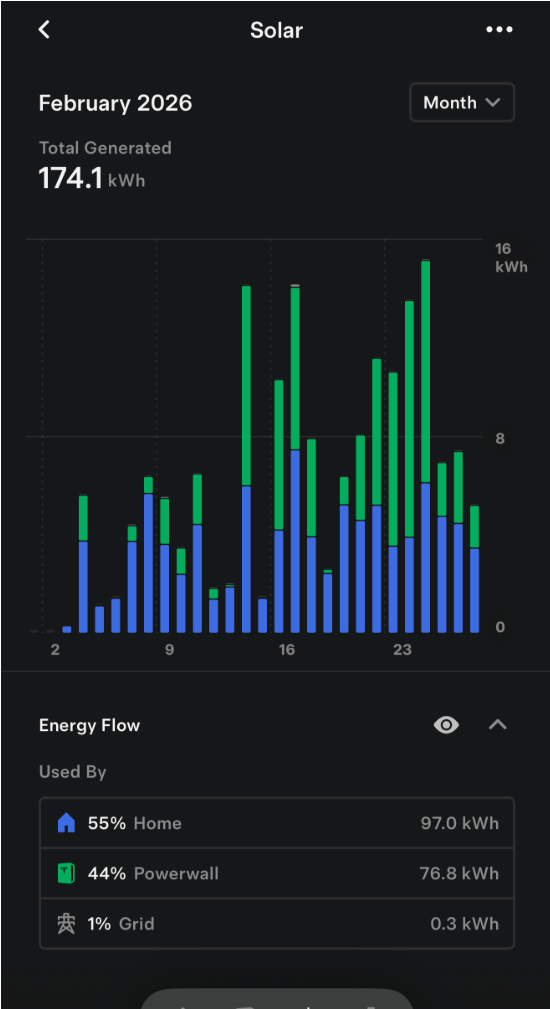
February 2026
From 2 February to the end of the month, it generated 174.1kWh.
First half of March 2026
By 15 March it had generated 198.7kWh during the month.
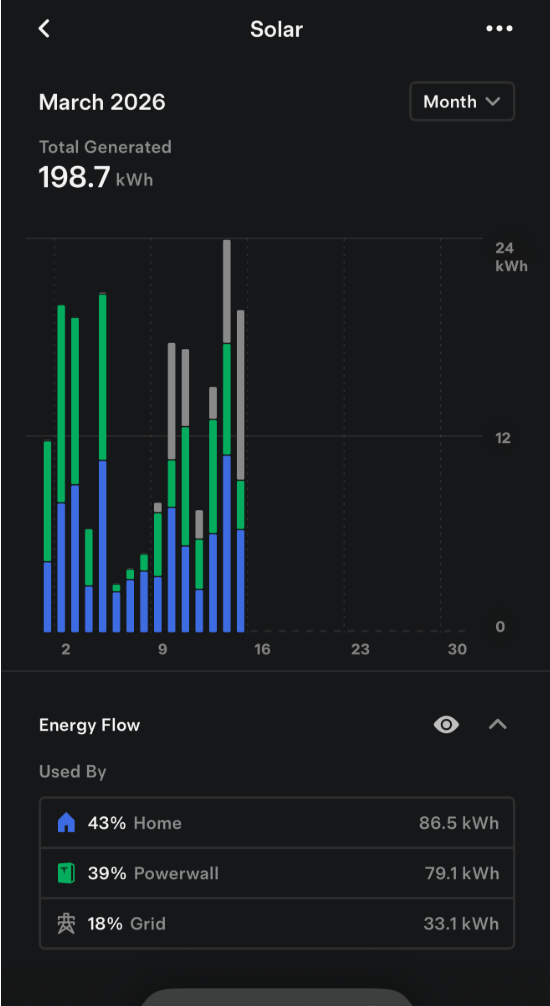
Those were early, late-winter figures rather than a basis for estimating full-year performance. They did, however, confirm that both roof orientations were working and that output was increasing quickly as the days lengthened.
What we would do differently
If repeating the project, we would:
- compare every included item rather than relying on a headline price match
- insist that backup earthing requirements are confirmed in writing
- confirm whether bird protection is included
- ask who owns each stage of the G99 and export-MPAN process
- verify both solar arrays in the app before the installation team leaves
- request a clear explanation of export-control settings
- retain enough final payment leverage until the full system is demonstrably operational
We might also have chosen the Octopus installation despite the similar headline price, because its quotation appeared more complete. That is a judgement based on our own experience, not a claim that one installer will always outperform another.
Would we install solar and a battery again?
Yes.
The installation experience was more stressful than necessary, but the underlying system has exceeded our early expectations. Solar, battery storage, EV charging and an all-electric home complement one another well when they are managed as one system.
The more interesting question is no longer whether the equipment works. It is how much it generates, how much grid electricity it displaces, how export changes the economics and how the Powerwall behaves across a full range of seasons.
That is the focus of our next performance update. In the meantime, the current equipment, tariff and automation setup is documented on Our Setup, and the tariff logic behind our move to EDF is explained in Why I moved from Octopus to EDF.