Peugeot e-308 GT: 10 Months, 10,000 Miles — An Honest Long-Term Review
I've been driving our Peugeot e-308 GT for ten months and 10,000 miles. Here's what it's actually like to live with — the real-world range, what it costs to charge at home, driving to France, and the one frustration I didn't expect.

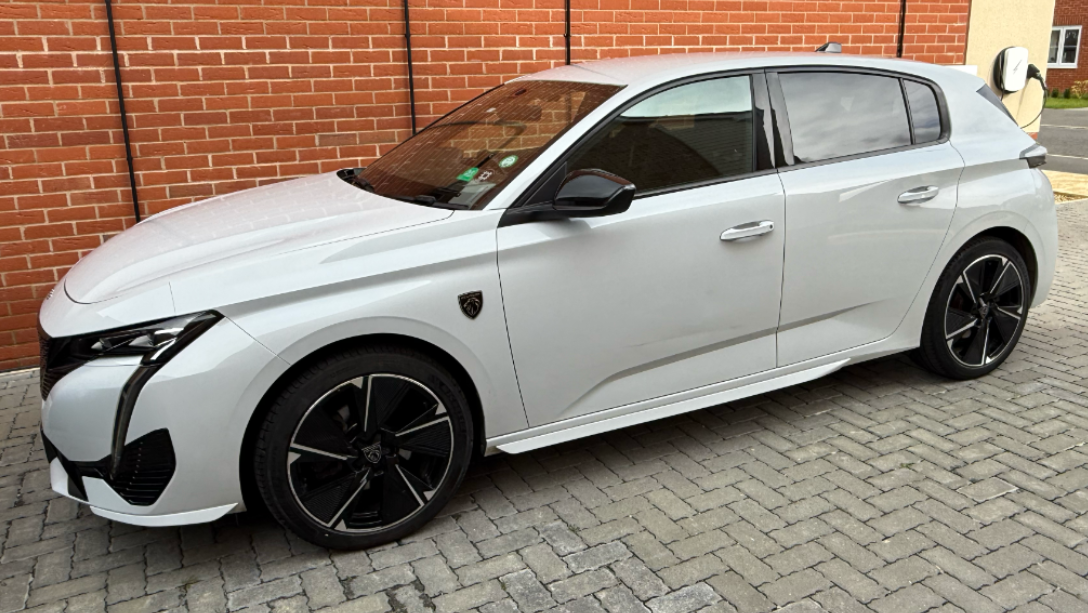
I've been driving our Peugeot e-308 GT since June 2025. It's a 73-plate, so not the very latest version, but it's the one I live with every day. After ten months and around 10,000 miles, I think that's worth more than a first-impressions test drive. This is what it's actually like to own.
Why the e-308?
I'm not new to Peugeot. I've had a 205, a 306, a 407, a 208, and an e-208 before this one. So when we decided to go fully electric, the e-308 was a natural step up. It's bigger than the e-208, still unmistakably a Peugeot, and with a 54kWh battery offering a claimed WLTP range of around 250 miles.
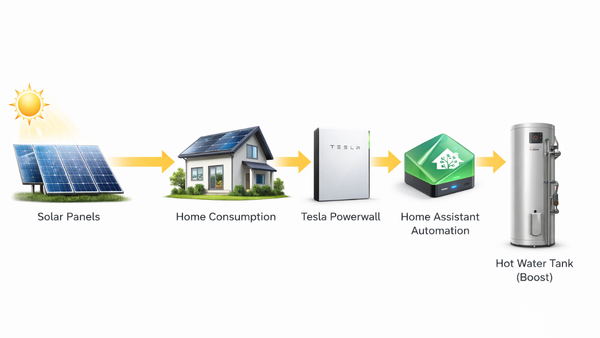
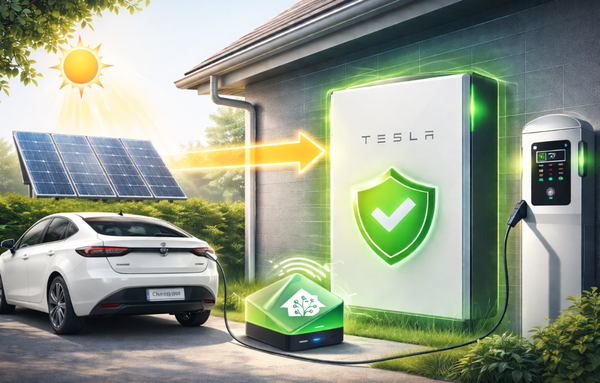
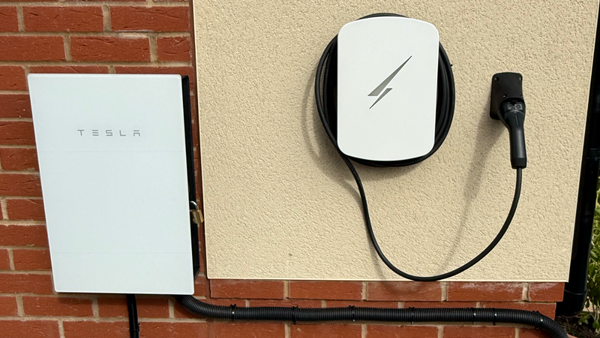
We also have a Peugeot e-208 as the second car, so we're a two-EV, all-Peugeot household. Between the solar panels, the Powerwall, and Intelligent Octopus Go, the idea was to run both cars as cheaply as possible. The e-308 fits neatly into that setup (at least for us).
Range: The Number Everyone Asks About
Let's get straight to it. The dashboard shows around 250 miles on a full charge, which lines up with the WLTP figure. In the real world? I get about 140 miles.
That's a significant gap, and I know it sounds bad on paper. But it's a realistic number based on how I actually drive (a mix of dual carriageways, motorways, and normal roads). Heating, speed, hills, and weather all take their toll, just like they do with any EV. If I drove exclusively around town at 30mph with the heating off, I'd get much closer to the official figure. But that's not how I use the car.
For day-to-day driving (commuting, errands, local trips) 140 miles is more than enough. I rarely need to charge more than every few days, and when I do, it happens overnight at home while I'm asleep.
Charging at Home: 2.3p Per Mile (About to Get Even Cheaper)
This is where the numbers get impressive. We're on Intelligent Octopus Go, which schedules our overnight charging automatically through the Hypervolt Pro 3 and the Octopus eco-system. Currently we're paying 8p per kWh during the off-peak window.
A typical charge from around 20% to 100% uses around 40kWh. At 8p per kWh, that's £3.20 to go from nearly empty to full. For roughly 140 miles of real-world driving, that works out at about 2.3p per mile. Certainly not to be sniffed at.
And it's about to get better. From 1st April 2026, our off-peak rate drops to 4.49p per kWh. That brings the same charge down to £1.80 or just 1.3p per mile. (I actually had to calculate that twice to check!).
To put that in context: a comparable petrol car doing 45mpg at £1.40 a litre would cost around 14p per mile (more than six times as much at our current EV rates), and over ten times as much from April. And with petrol prices only heading upwards given the situation in the Middle East, the gap is likely to widen further. It's worth noting that prolonged instability could eventually push electricity prices up too, but for now the direction of travel is clear. EVs charged at home on a smart tariff are dramatically cheaper to run.
Longer Trips and Public Charging
We don't just use the e-308 locally. We regularly drive to our house in Normandy (a roughly 350-mile trip) that typically requires three or four charging stops. That sounds like a lot, but the terrain in France is hilly and the motorway speed limit is mainly 130km/h, both of which eat into range. You learn to plan around it.
The e-308 supports DC rapid charging at up to 100kW, which in practice means a 20% to 80% top-up takes around 25 minutes. That's enough time to stretch your legs, grab a coffee, and get back on the road. On the French motorways, most service stations have been upgraded with fast chargers and we've rarely had trouble finding a working one. Tesla Superchargers are also available across France and are well worth knowing about. They're open to non-Tesla vehicles as long as you've set up a payment method in the Tesla app. They tend to be less busy than the other networks, partly because many people don't realise they can use them.
Off the motorway in Normandy, it's a different story. Chargers are less common and not always rapid. But this is changing. Carrefour, for example, has been installing chargers at their larger supermarkets, some with loyalty pricing. It's not perfect yet, but it's noticeably better than even a year or two ago.
One tip we've learned the hard way: avoid French motorway services around lunchtime. Between about 12:00 and 13:00 (and a bit either side) the services are packed. Queues for chargers, queues for food, queues for everything. We now plan our stops to avoid that window and it makes the journey much smoother.
Driving Experience
If you've driven a Peugeot before, you'll know they have a particular feel. The small steering wheel, the slightly raised instrument cluster, the way the car responds. I love it. It's what keeps me coming back to the brand. But I'll acknowledge it's not to everyone's taste. Some people find the driving position unusual, especially the smaller wheel and the way you look over rather than through it. If you're coming from a BMW or a VW, it'll feel different.
The e-308 GT specifically rides well. It's comfortable on longer trips without feeling soft or wallowy. The electric drivetrain is smooth and quiet, and while it's not a sports car, it's certainly punchy. There's a decent amount of power on tap, enough that overtaking on dual carriageways and climbing the hills in France at speed are both effortless. It won't pin you to the seat, but it never leaves you wanting more either.
Interior and Tech
The interior is one of the things I appreciate most. It has enough technology to feel modern without being overwhelming. The larger display is a real highlight, it's great for maps and gives you a clear view of everything without needing to squint or lean forward. The digital instrument cluster behind the wheel is customisable too, which I like. It takes a bit of playing around to find the layout and information that suits you, but once you've got it dialled in it's really useful.
The physical controls that remain are where you'd expect them, and the cabin doesn't try to be a Tesla. This I mean as a compliment. It's not just minimalist for the sake of it.
CarPlay is my main interface for navigation and music, and it works well most of the time. I say most of the time because the wireless CarPlay connection can be flaky, occasionally dropping or failing to connect on the first try. I suspect that's more of an Apple CarPlay issue than a Peugeot one, but it's worth mentioning because it does happen. One thing I do wish the car had is wireless phone charging. It feels like a bit of an oversight at this price point, especially when wireless CarPlay is built in but you still need a cable to keep your phone topped up. Seems counter-intuitive to me.
The seats are comfortable for long drives and the overall cabin feels well put together for the price point. The back seats are reasonable. Certainly not the most spacious, but passengers aren't sitting with their knees under their chin either. It's fine for a reasonable length drive. There is also the hatch in the centre rest, which can be pushed through to the boot. That's been quite handy on a couple of occasions (taking a new lawn scarifier home). In our case the back is mostly occupied by the dog, who hasn't complained once (yet).
The boot is a decent size for a hatchback. No real complaints here (maybe a charging port would have been nice.....)
My One Frustration: Tyres
This is the GT model, which comes with sportier, lower-profile tyres on 18-inch alloys. They look great. They also don't love potholes.
I live on the Suffolk/Cambridgeshire border, and the roads around here are, to put it mildly (and without swearing) awful. In ten months I've had to replace three tyres due to pothole damage. To be fair, we're relatively new to the area and still learning which roads to avoid. It's getting better as I learn to read the road surface more carefully. But it's a genuine running cost to factor in.
If you live somewhere with smooth roads, this won't be an issue. If you're regularly navigating rural B-roads with craters in them, it's something to be aware of. I'd seriously consider whether the Allure trim with smaller wheels might have been the more practical choice (hindsight being 20:20).
Would I Recommend It?
Yes — with a caveat.
If you're already a Peugeot fan, the e-308 GT is a genuinely good electric car. It drives well, looks smart, charges quickly enough, and at 2.3p per mile on a home charger it costs next to nothing to run. The real-world range is more than enough for daily use, and with a bit of planning it handles longer trips comfortably too.
If you've never driven a Peugeot, go and test drive one first. The driving position and the feel of the car divide opinion, and you'll know within five minutes whether it's for you. Don't dismiss it based on the badge... give it a chance and make up your own mind.
For me, it's been a great car. Ten months and 10,000 miles in, I have no regrets.